Applied agroecology group

Harvesting the future

News

The OCB Operational Group advances in soil and biomass sampling in organic olive groves

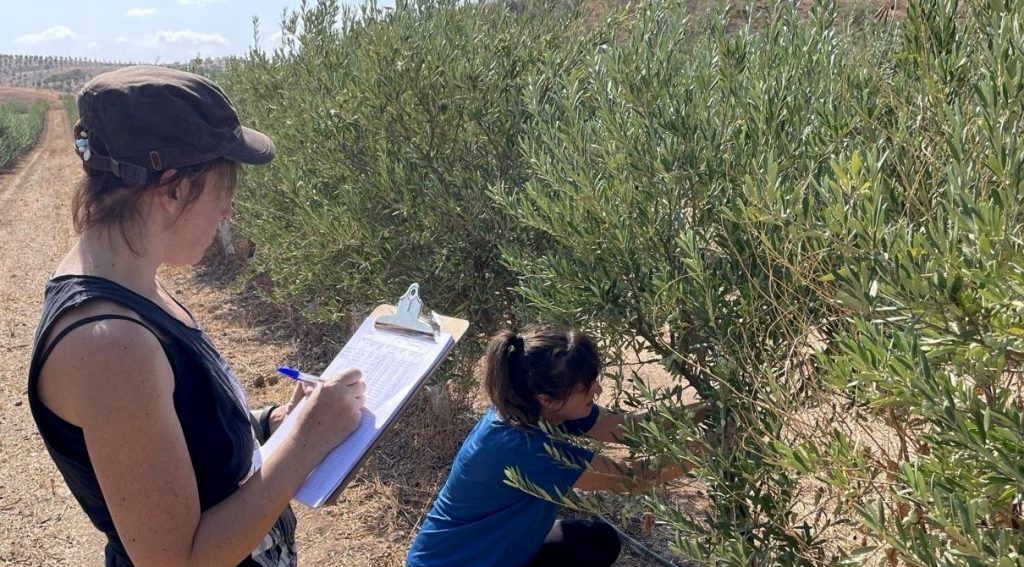
On October 8 and 9, new sampling sessions were carried out by the OLIVE CARBON BALANCE (OCB) Operational Group at Cortijo El Puerto (Lora del Río, Seville) and Luque Ecológico (Luque, Córdoba), both beneficiary entities of the project. Teams from the University of Jaén (UJA) and CEBAS-CSIC took part in these visits.

The University of Jaén is measuring olive tree biovolumes to quantify the carbon stored in the permanent structure of the trees (trunk and primary and secondary branches). The sampling design includes five trees per farm, along with the installation of dendrometers on five olive trees per farm to monitor growth over time. The study covers olive groves under different management systems —super-intensive, intensive, and traditional— in order to assess how carbon storage varies depending on the cultivation system and tree structure.

These activities are part of the second phase of the OCB project and strengthen its goal of developing a robust and verifiable methodology for calculating the carbon balance in olive groves.

The results of these field campaigns will help refine the carbon balance calculation algorithms being developed by the OCB project, integrating in situ data (soil and biomass) with remote sensing observations. This work is key to establishing comparable indicators across management systems and to the future validation of results within the carbon credits market.

AgroecoliveLab in the First Newsletter of the European Project Scale-it

The first newsletter of the European project Scale-it is now available — an initiative that aims to advance innovative solutions in the fields of sustainability and bioeconomy.

In this first edition, no scientific results are presented yet, but the research teams that make up the consortium are introduced. Among them, we are honored to represent AgroecoliveLab, actively participating in the development of this exciting project that combines science, technology, and environmental commitment.

We will continue to share updates on the progress and results that emerge throughout the upcoming stages of the project.

Now you can calculate the carbon credits of your olive grove with the new tool from the Life Oliver project!

The LIFE OLIVER project offers the public a free, simple, and multilingual calculator that allows you to estimate the carbon credits generated by your olive grove.

This tool has been designed to help farmers, technicians, and managers understand the climate change mitigation capacity of their olive farms, thus promoting more sustainable land management.


Would you like to know how much your olive grove contributes to fighting climate change?

👉 Try the calculator and find out for yourself:
https://olivernews1.wordpress.com/olivercalc_en/

SCALE-it PROJECT: NEW WEBSITE ONLINE

AgroecoliveLab is a partner in the European project SCALE-it, an initiative aimed at developing sustainable alternatives to problematic inputs used in organic farming. In our case, we are working on finding substitutes for copper applicable to organic olive growing.

We are pleased to announce that the project’s official website has just been launched:
👉 https://scale-it-organic.eu/

🌿The Olive grove: A natural air purifier

📚 AgroecoliveLab has participated in several studies quantifying carbon credits in olive groves. For example, in the C-Olivar Project we identified about 412 tons of CO₂ sequestered across 440 hectares in the Estepa Protected Designation of Origin, as a result of implementing carbon farming practices 👨🌾.

🙂 These are encouraging figures, showing that Andalusian olive groves are among our land’s greatest allies in the fight against climate change 🌡️.

https://www.asajasevilla.es/noticias/proyectos/item/9765-el-grupo-operativo-c-olivar-calcula-unas-412-toneladas-de-co-secuestradas-en-una-muestra-representativa-del-olivar-de-la-d-o-p-estepa.html

José Liétor, member of Agroecolivelab, takes part in the 3rd Olive Growing Forum of COPE Jaén

On September 30, our colleague José Liétor participated in the 3rd Olive Growing Forum organized by COPE Jaén, held at the former Teacher Training School of the University of Jaén.

This year’s edition focused on the crucial role that the agroecological transition plays in the socioeconomic future of olive cultivation, highlighting its importance both from an environmental and a productive perspective.

José took part in the roundtable discussion entitled “The Olive Grove as a Carbon Sink: Climate Challenges and Opportunities”, alongside experts from COAG, Caja Rural, and the Provincial Council of Jaén.

The debate addressed the challenges and opportunities that olive groves present as a tool for mitigating climate change, as well as their strategic role in ensuring the sustainability and competitiveness of the olive oil sector.

What should the future of european agriculture look like?

🌍 Last week we were at the Leibniz Centre for Agricultural Landscape Research (Germany) for the annual ClimateCropping meeting.


👩‍🔬👨‍🔬 The AgroecoliveLab team, represented by Roberto García, Beatriz Ruiz, and José Liétor, presented the progress of our life cycle assessment work applied to long-term field trials across several European countries.


🌱 The goal? To provide solid data demonstrating the benefits of sustainable practices over conventional ones in a wide variety of crops.

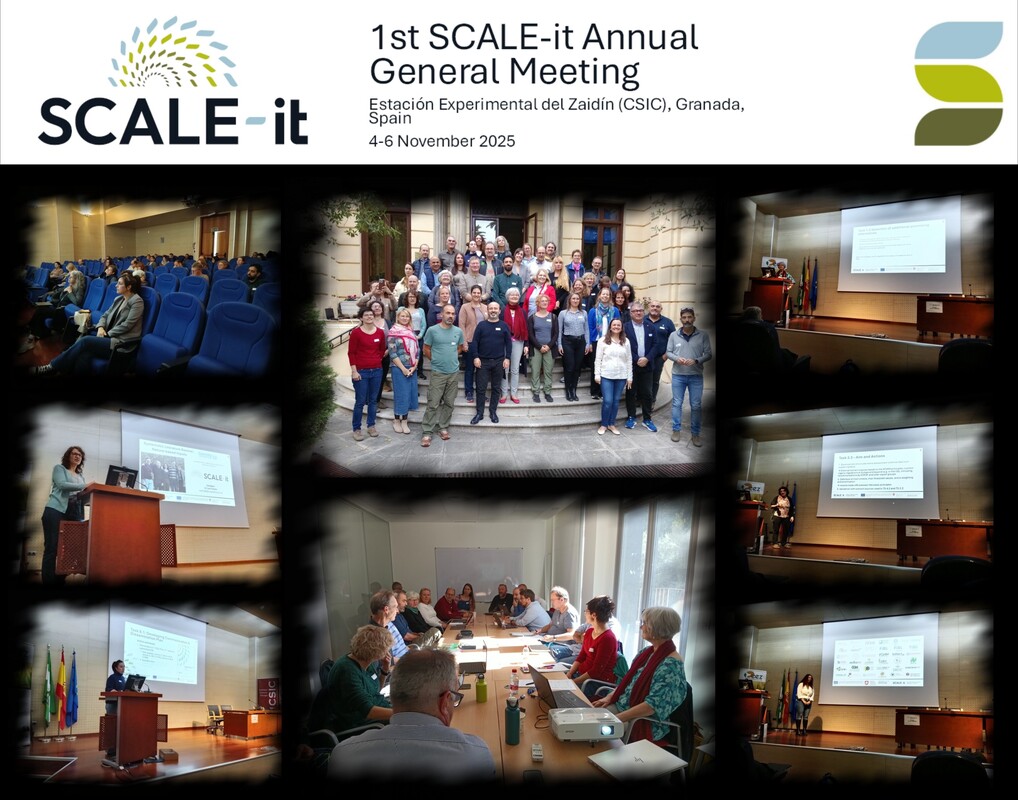
 The Scale-it project has kicked off strongly.

🌱 Scale-it aims to drive the agroecological transition of olive groves, exploring innovative solutions to enhance the sector’s sustainability, improve resource management, and contribute to climate change mitigation through regenerative farming practices.

👉 We invite you to subscribe to its Newsletter, the best way to stay up to date with the progress and results as they unfold.